Window Tint, Paint Protection and Ceramic Coating in Rosemont, CA
We install window tint, paint protection film, ceramic coating and windshield protection film at our shop in Rosemont. Before any film touches your car, we explain what it blocks, what it doesn't and how long it lasts, so drivers from Rosemont, Sacramento and Elk Grove can pick with clear information.
What Moves the Price
Two cars that look similar can price differently. Here is what actually changes the quote, so the number you hear on the phone makes sense.
We give you a quote by phone based on your vehicle and the products you are interested in. If we find something unexpected when you bring the car in, we explain it before any extra work starts.
- Film or coating grade
- Ceramic window film costs more than dyed or carbon film because the heat-rejecting particles cost more to make. Paint protection films and coatings also come in grades with different thickness, gloss and self-healing top coats.
- How much of the car is covered
- A partial front package on paint protection film covers the bumper, part of the hood and mirrors. A full front or full body wrap covers far more panels and takes far more labor.
- Vehicle size and glass shape
- An SUV with small quarter windows and a steeply curved rear glass takes longer than a coupe. Heavily curved glass needs the film heat-shrunk to fit before it goes on.
- Removing old tint
- Faded or bubbling tint has to come off, along with its adhesive. On a rear window, this is slow work because the defroster lines are easy to damage.
- Paint condition before film or coating
- Ceramic coating and paint protection film lock in whatever is underneath. If the paint has swirls or water spots, correcting it first adds time to the job.
Four Ways to Protect Your Car
Each service protects a different surface. Window tint handles heat, glare and UV on the side and rear glass. Paint protection film and ceramic coating both guard paint, but in very different ways, and windshield protection film takes the rock chips that would otherwise crack your windshield. Read the service pages for the details, or ask us which combination fits how you drive.
Paint Protection Film
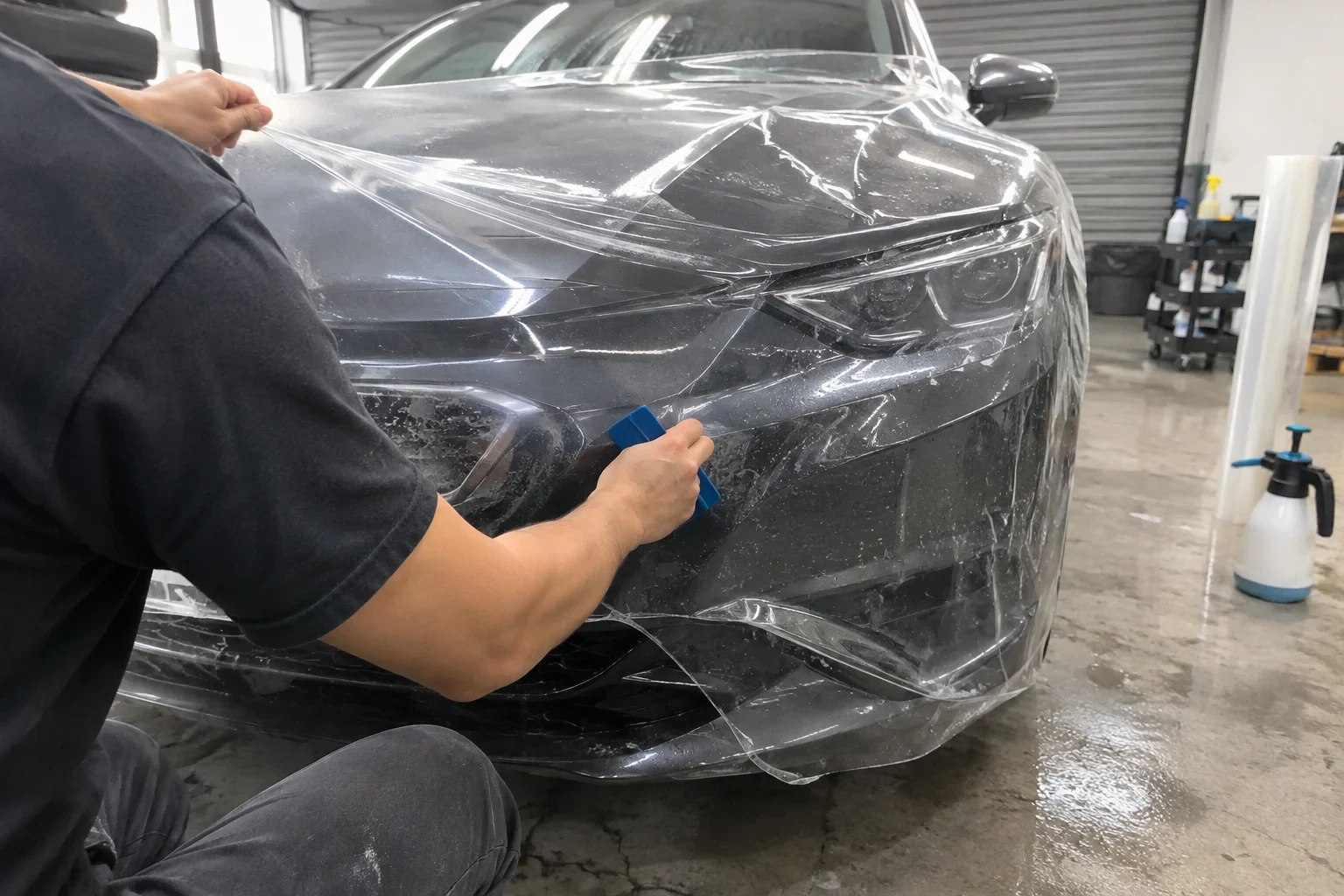
Clear urethane film over your paint that takes rock chips, bug etching and light scratches so the finish underneath stays factory fresh.
Ceramic Coating
A hard, glossy silica layer applied over corrected paint so your car sheds water and grime, resists UV fade and washes clean in less time.
Window Tint
Dyed, carbon and ceramic window film compared by heat rejection and UV protection, installed to California shade rules at our shop.
Windshield Protection Film
A clear, replaceable film on the outside of your windshield that takes the sand blasting and small rock hits so the glass underneath doesn't have to.
About Our Shop
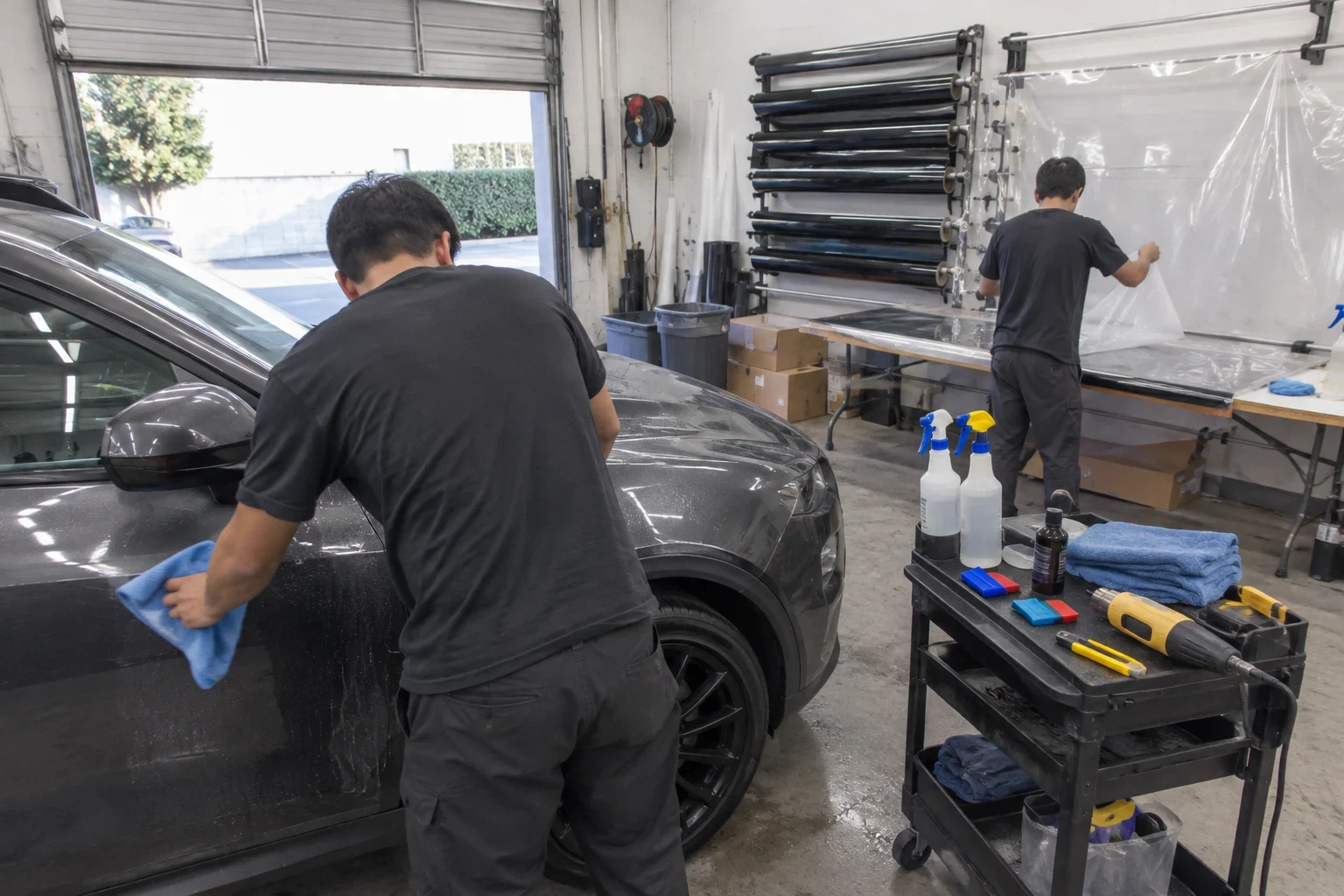
Car Window Tinting Rosemont is a film and coating shop for drivers who care about how their car looks and how it holds up. Some customers want a new car kept looking new. Others want a daily driver that stays cooler and keeps its dashboard from cracking. Both get the same explanation of their options.
We work only on vehicles, and only in our shop. That focus lets us talk in specifics: which film suits a black interior, why a windshield takes chips at highway speed, how a coating's hydrophobic layer actually sheds water. If you leave knowing more than when you arrived, we have done our job well.
- Certifications
- STEK certified installer
How a Job Runs
Most jobs follow the same four steps, from the first call to driving away.
- 1
Call for a quote
Tell us your year, make and model and what you want protected. We explain the options and give you a quote by phone, or set up a professional consultation if you want to see film samples in person.
- 2
Bring the car to our shop
We look over the glass and paint with you, point out any chips, old adhesive or paint defects, and confirm the plan.
- 3
Prep and install
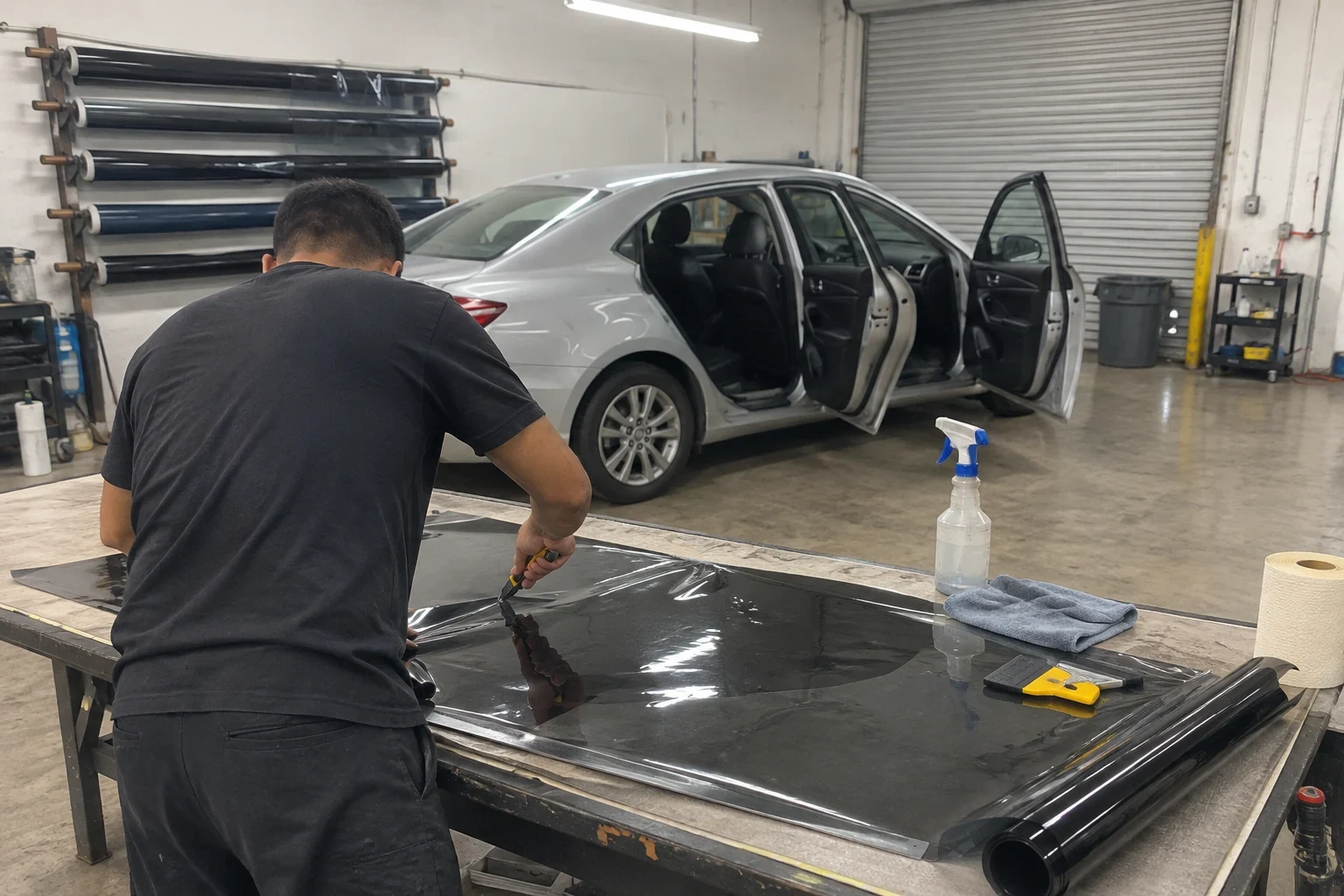
Glass is scraped and cleaned, paint is decontaminated, and film is cut to your exact panels before it is applied. Coatings go on panel by panel and are leveled before they flash.
- 4
Curing and aftercare
Window tint needs a few days before the windows go down, and a slight haze while moisture dries out is normal. We walk you through care for film and coatings before you leave, including how and when to wash.
How We Work, and Why It Matters
Film and coating products are easy to oversell because most of the difference is invisible on day one. We show you what you are paying for and why.
Film installed to the maker's standards
We are a STEK certified installer. Our paint protection film work follows the film maker's own methods for trimming, wrapping edges and handling the film.
Plain answers on film types
Dyed, carbon and ceramic window films can look identical on the roll. The difference is what blocks the heat. Dyed film absorbs it, carbon film reduces it, and ceramic film uses nonconductive particles to reject infrared heat without interfering with phone or GPS signals. We tell you which one you are getting and why it costs what it does.
Honest about what each product can't do
A ceramic coating will not stop a rock chip. Paint protection film will not make your car stay clean longer the way a coating does. Darker tint is not automatically cooler. We say this up front so you buy the right product once.
Clean, controlled install bay
Dust under film shows up as a speck you will see every time the sun hits the glass. Working inside our shop, rather than in a driveway, lets us control dust, temperature and lighting while film is laid and squeegeed.
We check the surface first
Swirl marks, old tint adhesive and failing factory clear coat all affect the result. We look before we quote and tell you if prep work is needed.
Drivers We Serve Around Rosemont
Our shop is in Rosemont, CA, and we see drivers from across the area. Customers come in from Sacramento, Elk Grove, Carmichael, Arden-Arcade, La Riviera, Mather and Florin, as well as Vineyard, Lemon Hill and Fruitridge Pocket.
- Rosemont
- La Riviera
- Arden-Arcade
- Carmichael
- Florin
- Vineyard
- Lemon Hill
- Fruitridge Pocket
- Mather
- Sacramento
- Elk Grove
All work is done at our shop, so plan to bring your car in. We will tell you how long to expect it to stay when you call.
Questions Drivers Ask Us
- How dark can I legally tint my windows in California?
- Under California law, film on the front door glass must still pass at least 70 percent of visible light, so those windows can only take a very light film. Behind the driver, the rear side glass and back window are allowed to go darker. The windshield can carry a tint band along the top and nothing more. Before we install anything, we tell you which shades are legal on your car.
- Does darker tint keep the car cooler?
- Not necessarily. Darkness controls glare and privacy, but most of the heat you feel comes from infrared light. A light ceramic film can reject more heat than a dark dyed film, which is why we explain heat rejection and darkness as two separate numbers.
- What is the difference between paint protection film and ceramic coating?
- Paint protection film, sometimes called clear bra, is a thick urethane layer that absorbs rock chips and light scratches. Ceramic coating is a thin, hard layer that bonds to the clear coat and makes the paint glossier and easier to wash. Coating does not stop chips. Many owners put film on the front of the car and coating over the rest.
- Can you take off old tint that is purple or bubbling?
- Yes. Faded dyed film turns purple as its dye breaks down in the sun, and bubbles form when the adhesive lets go of the glass. We peel the film and then remove the leftover adhesive so the new tint has a clean surface to bond to. On the rear window we work slowly, because the defroster lines are printed on the glass and can be scraped off.
- Why does my new tint look hazy or have small bubbles?
- Film is applied with a water-based solution, and some moisture stays trapped between the film and glass for a few days. That causes a light haze or tiny water pockets that clear on their own as it dries. Warm weather speeds it up. If something has not cleared after the curing period, bring it back and we will look at it.
- How much time should I plan to leave my vehicle with you?
- It depends on the service. Tinting the glass takes the least time of anything we do. Paint protection film and ceramic coating need more hours in the bay, and full coverage or paint correction stretches that further. When we put together your quote, we tell you how long to plan for.
- What does windshield protection film actually do?
- It is an optically clear film that takes the impact of small rocks and road debris, so the glass underneath is less likely to chip or crack. It does not darken the windshield, and it can be replaced when worn instead of replacing the glass.
- Is there a warranty on window tint?
- Yes. Our window tint comes with a lifetime warranty. We go over what it covers when we give you your quote by phone.
Know Your Options Before You Choose
Give us your year, make and model and tell us which surfaces matter most to you. On the phone we lay out the film and coating choices, what each one handles and what it leaves alone.