ServicesWindshield Protection Film
Windshield Protection Film in Rosemont
Windshield protection film is a thin, optically clear layer applied to the outside of the glass. It absorbs the grit and small stones that pit and chip a windshield, and when it wears out, we replace the film instead of the glass.
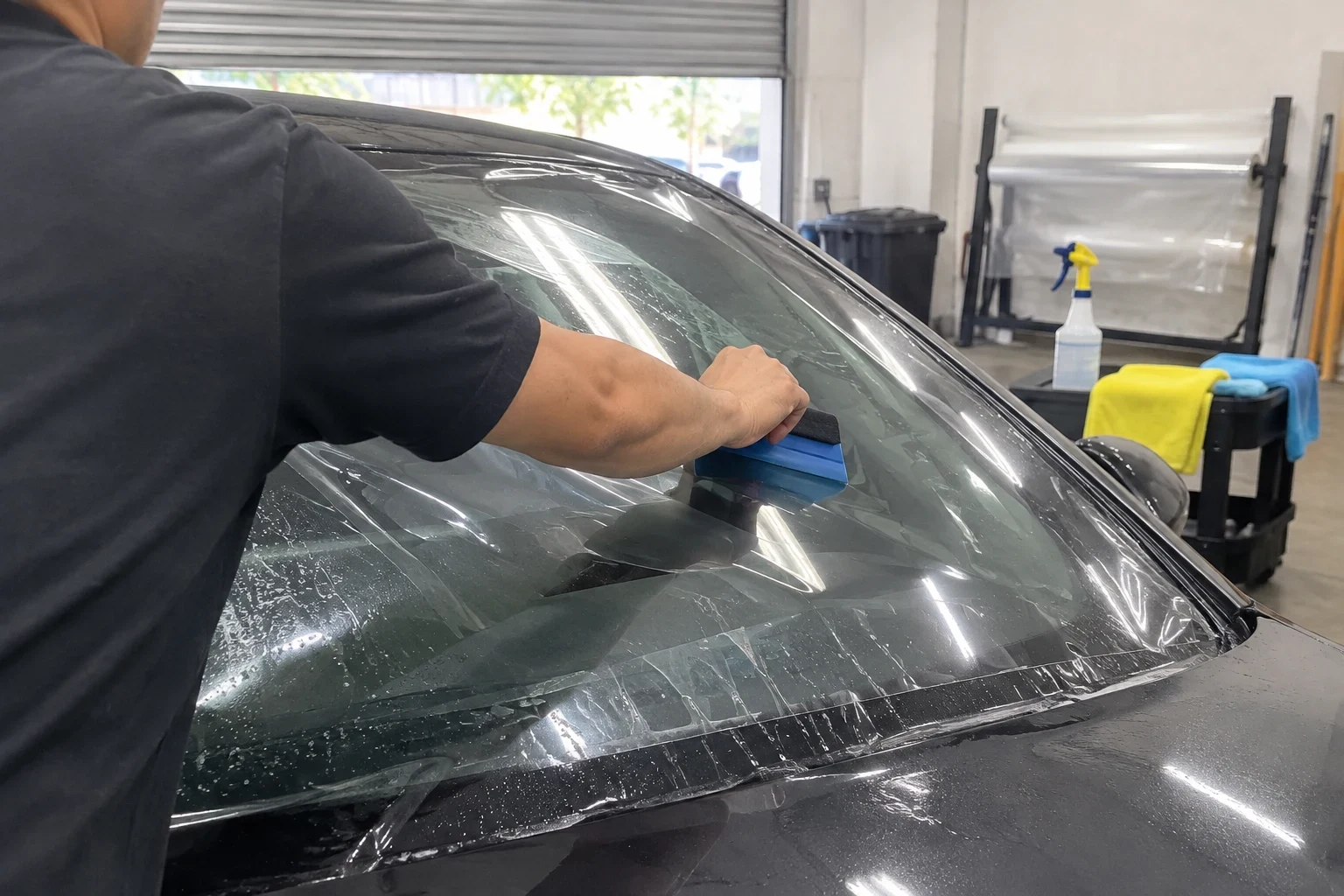
What windshield film is, and what it is not
Your windshield sits at the front of the car, nearly upright, taking every particle the car ahead kicks up. Over thousands of miles, fine sand leaves tiny pits that scatter light from headlights and low sun. Larger stones leave chips and star breaks that can spread into cracks as the glass heats and cools.
The film is a multi-layer clear laminate with a hard top coat. When a pebble strikes it, the layers flex and spread the impact before it reaches the glass, and the top coat takes the sanding that would otherwise pit the windshield. It is not tint. It does not darken the glass, and it is made to stay optically clear so your view and any forward camera see through it normally.
It is the right call for newer cars with expensive glass, cars with camera-based driver assistance that needs recalibration after a replacement, and anyone who puts a lot of freeway miles on the car behind trucks and gravel haulers. It is less useful on an older windshield that is already heavily pitted, since the film protects glass but does not repair it.
What the install includes
- A close look at the glass
- We start by checking the windshield for chips, cracks and existing pitting, and we show you what turns up. An open chip should never be sealed under film, so if one needs a glass repair, you hear about it before we install.
- Full decontamination
- We wash the glass, clay it and strip off old wax, wiper residue and road film. Anything left on the surface gets trapped under the film as a speck or bubble.
- Heat-formed to your windshield
- Windshields curve in two directions, so the film is shrunk to the shape of the glass with controlled heat before it is laid down. That keeps the edges flat instead of lifting or wrinkling.
- Edges finished at the frit
- We trim the film to sit inside the black ceramic band around the glass. There the edge stays hidden and out of the path of wiper and wash wear.
- Aftercare in plain terms
- Before you leave, we explain the cure period, how to wash the film and when to swap wiper blades, so the top coat lasts as long as it should.
Signs windshield film makes sense for your car
You just bought the car
New glass is the best time to install. There is no pitting yet, so you keep the clarity it came with instead of preserving damage.
You have replaced a windshield before
If rock chips have already cost you one windshield, the film is a direct answer to the cause. Many cars also need their forward camera recalibrated after a glass swap, which adds to the bill.
Night glare is getting worse
Fine pitting catches oncoming headlights and turns them into starbursts. If your glass is still fairly clean, film keeps it from heading that direction.
Your commute is mostly freeway
Highway speed behind trucks means more and harder strikes. The more miles you drive in traffic, the faster unprotected glass wears.
You already protect the paint
If the front end has paint protection film, the windshield is the main forward surface still taking hits bare.
How the day at our shop goes
- 1
Drop-off and walk-around
You bring the car to our shop and we look at the windshield together. We note existing chips and pits so we agree on the starting condition.
- 2
Prep and forming
The glass is cleaned and decontaminated, then the film is laid on the outside of the windshield and heat-formed to its curvature. This step decides how clean the edges look later.
- 3
Application and trim
The film is applied with slip solution, squeegeed out from the center and trimmed inside the frit band. We check it from the driver's seat and the outside under shop lighting.
- 4
Cure and handover
Some light haze or small water pockets can show for a few days while moisture works out through the film. We go over what is normal, what is not, and how long to hold off on wipers and washes before you drive away.
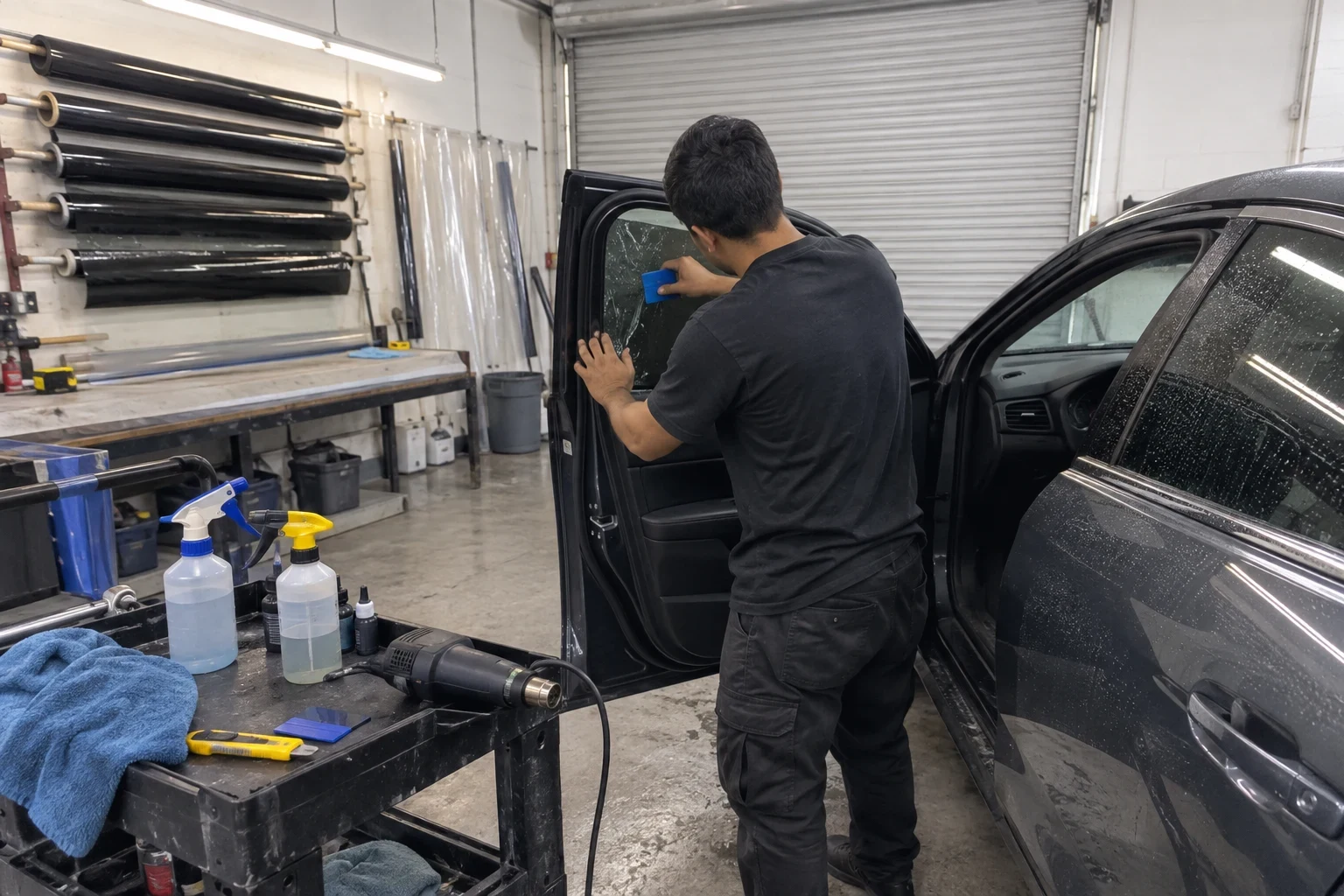
What moves the price of windshield film
Windshield film is priced per car rather than at a flat rate, because windshields vary more than most people expect. A small, gently curved pane uses less film and less forming time than a large, steeply raked one. Once we know the car, we can give you the number over the phone.
- Windshield size and curvature
- Big windshields and those with deep compound curves take more material and more time under the heat gun. Trucks, vans and some sports cars sit at opposite ends of that range.
- Film choice
- Films differ in thickness, top coat hardness and optical clarity. A thicker film soaks up more impact energy, and it costs more to buy.
- Sensors and camera housings
- Rain sensors, lane cameras and heated wiper zones mean more careful trimming and layout around those areas, and that adds labor time.
- Removing old film
- When a worn film is still bonded to the windshield, we strip it and clean every trace of its adhesive off the glass first. Only then can the new layer go down flat.
Windshield film questions we get
Something not covered here? (916) 378-1565
Will I see the film while driving?
In normal driving, no. Good windshield film is made to be optically clear, and once cured it looks like bare glass from the driver's seat. During the first few days you may notice light haze while moisture dries out, which clears on its own.
Is windshield protection film legal in California?
California restricts tint on the windshield to a strip at the top, but protection film is clear and does not darken the glass. We install clear film only on the windshield. If you also want a sun strip, that is a separate window tint job.
Will it stop every rock?
No. It reduces pitting and stops many small and medium strikes from chipping the glass, but a large stone at freeway speed can still break a windshield. Think of it as a wear layer that takes most of the everyday damage.
How long does the film last?
It is a sacrificial layer, so it wears with miles, wiper use and how hard the strikes are. When the top coat gets scuffed or a hit punctures it, we remove the film and install a fresh piece, which costs far less than new glass.
Does it affect my lane camera or rain sensor?
The film is clear and thin, and we lay it out around sensor housings with care. Because we are a STEK certified installer, we hold ourselves to the same fit and finish on the windshield that we use on paint film, and we will talk through your specific car before the install.
Do my wipers still work normally?
Yes. Wipers run over the film just like glass, though worn blades with grit in them will scuff the top coat faster. Fresh blades after the install help the film last.
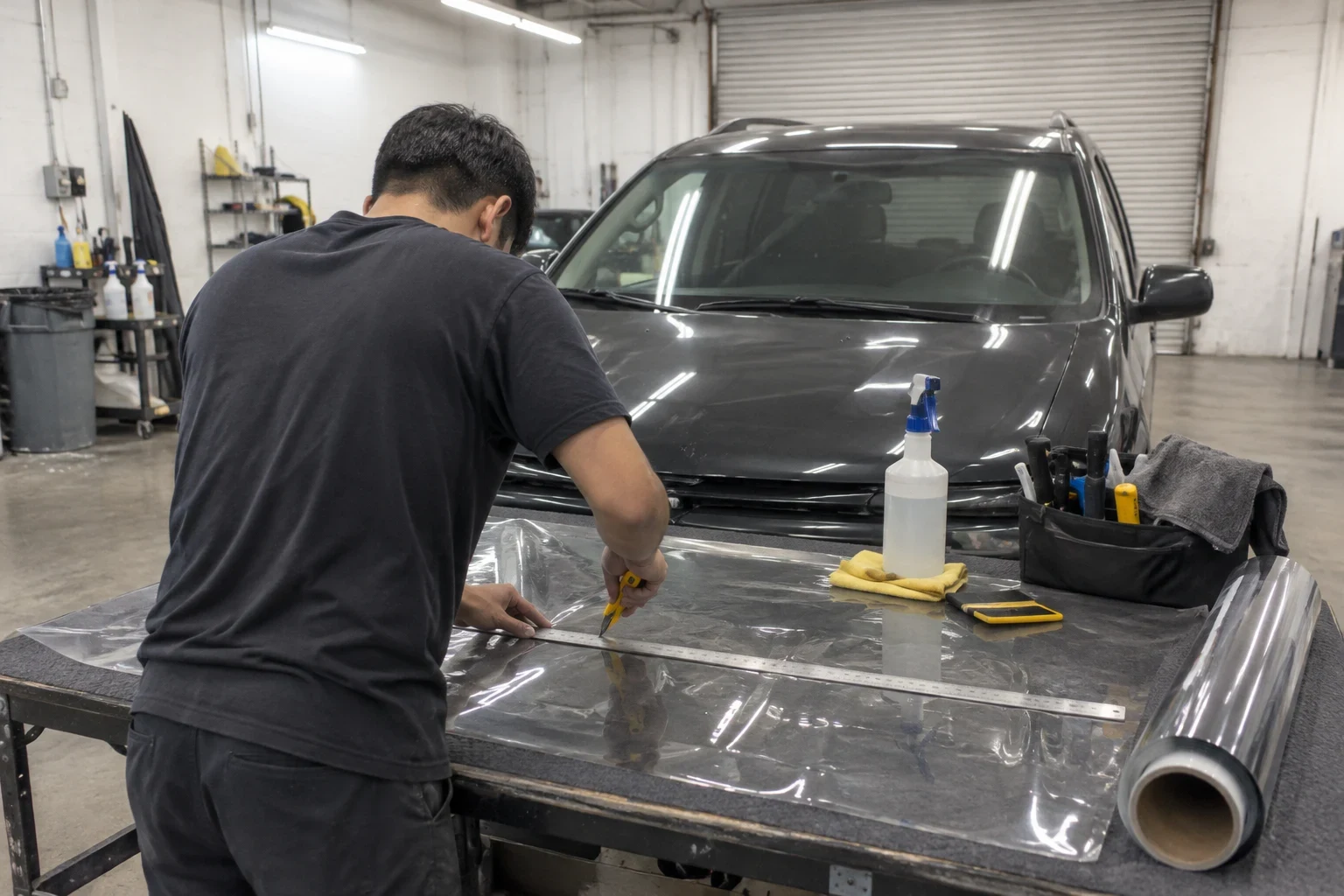
Find out what film your windshield needs
Give us your car's details and let us know if there are any chips or cracks in the glass right now. We will walk you through the film options and quote the install for your specific vehicle.