ServicesWindow Tint
Window Tint in Rosemont
We install window tint that cuts heat, blocks UV and reduces glare without fading purple in a few summers. Before you choose a shade, we explain what each film is made of, what the numbers on the spec sheet mean and what California allows on each window.
What window tint actually does
Window film is a thin polyester laminate with a scratch-resistant top coat and a pressure-sensitive adhesive. What sets one film apart from another is the layer in the middle. Dyed film absorbs light with color, so it darkens the glass but does little against heat and fades as the dye breaks down. Carbon film holds its color and blocks more infrared. Ceramic film uses nonconductive ceramic particles to reject infrared heat even in lighter shades, and it will not interfere with GPS, cell or keyless entry signals the way older metalized films can.
Three numbers matter on a spec sheet. VLT is how much visible light gets through. IR rejection is how much infrared heat the film blocks. TSER, total solar energy rejected, is the most honest single figure for how much cooler the cabin will feel. A dark film with a low TSER can feel hotter than a light ceramic film with a high one.
We are a STEK certified installer, and we walk you through these numbers in plain terms so you pick a film for what it does, not just how dark it looks. Once a long Sacramento-area summer starts heating the dash, that difference shows up every afternoon.
What a tint job at our shop includes
- Film selection by the numbers
- We show you film samples side by side and explain VLT, IR rejection and TSER for each. You choose the shade and the performance level, and you know what you are paying for.
- California shade guidance
- State law sets a floor for the driver and front passenger windows: at least 70 percent of visible light has to pass through, so only very light film belongs there. On the windshield, film is limited to a non-reflective band along the top four inches. The rear side windows and back glass have far more room to go dark. We map out which shade goes on which window before any film is cut.
- Precision-cut patterns
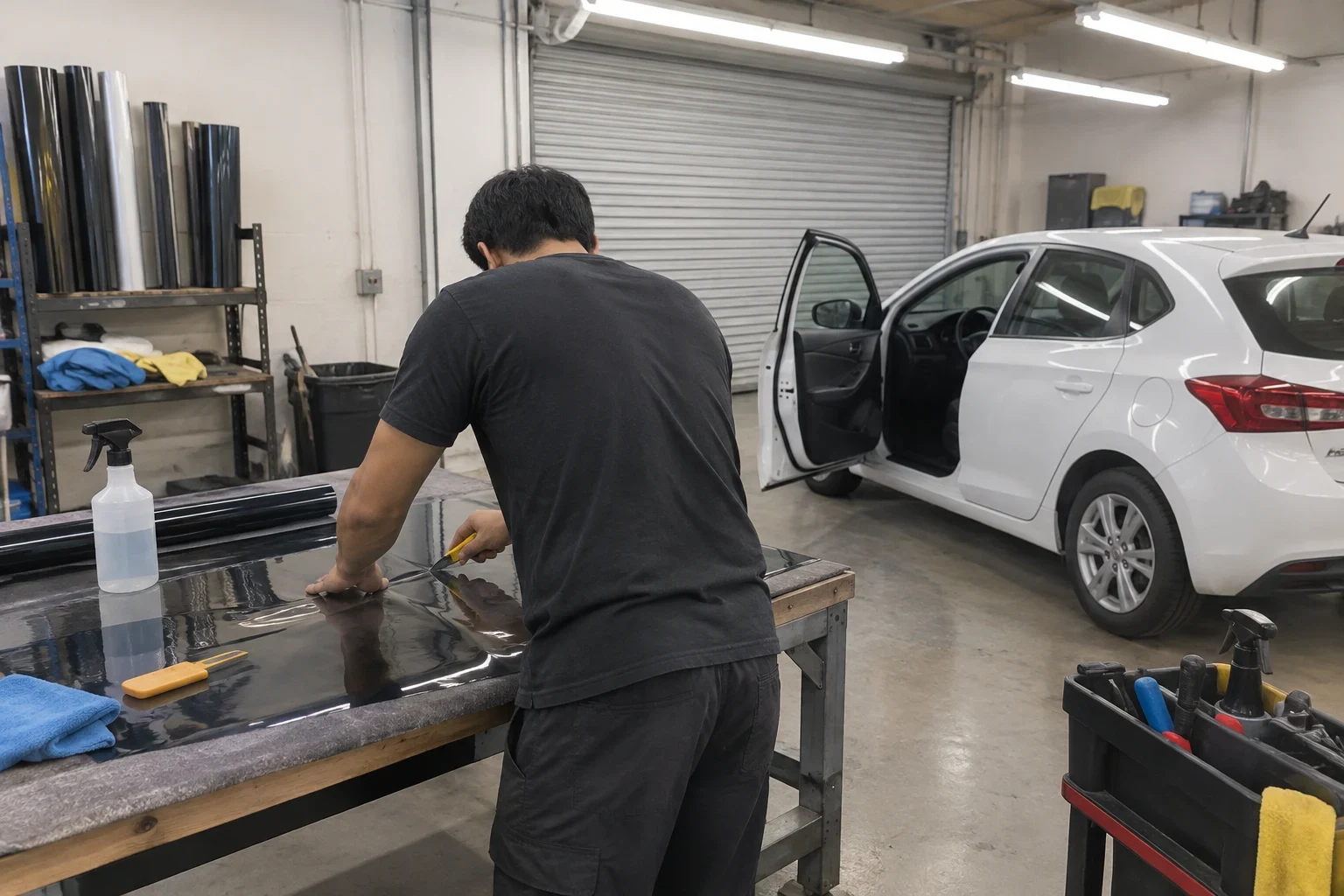
- Film is cut to the exact shape of each window, with the top edge filed so it sits just below the seal line. Clean edges mean fewer spots for dirt and lifting.
- Heat-shrunk back glass
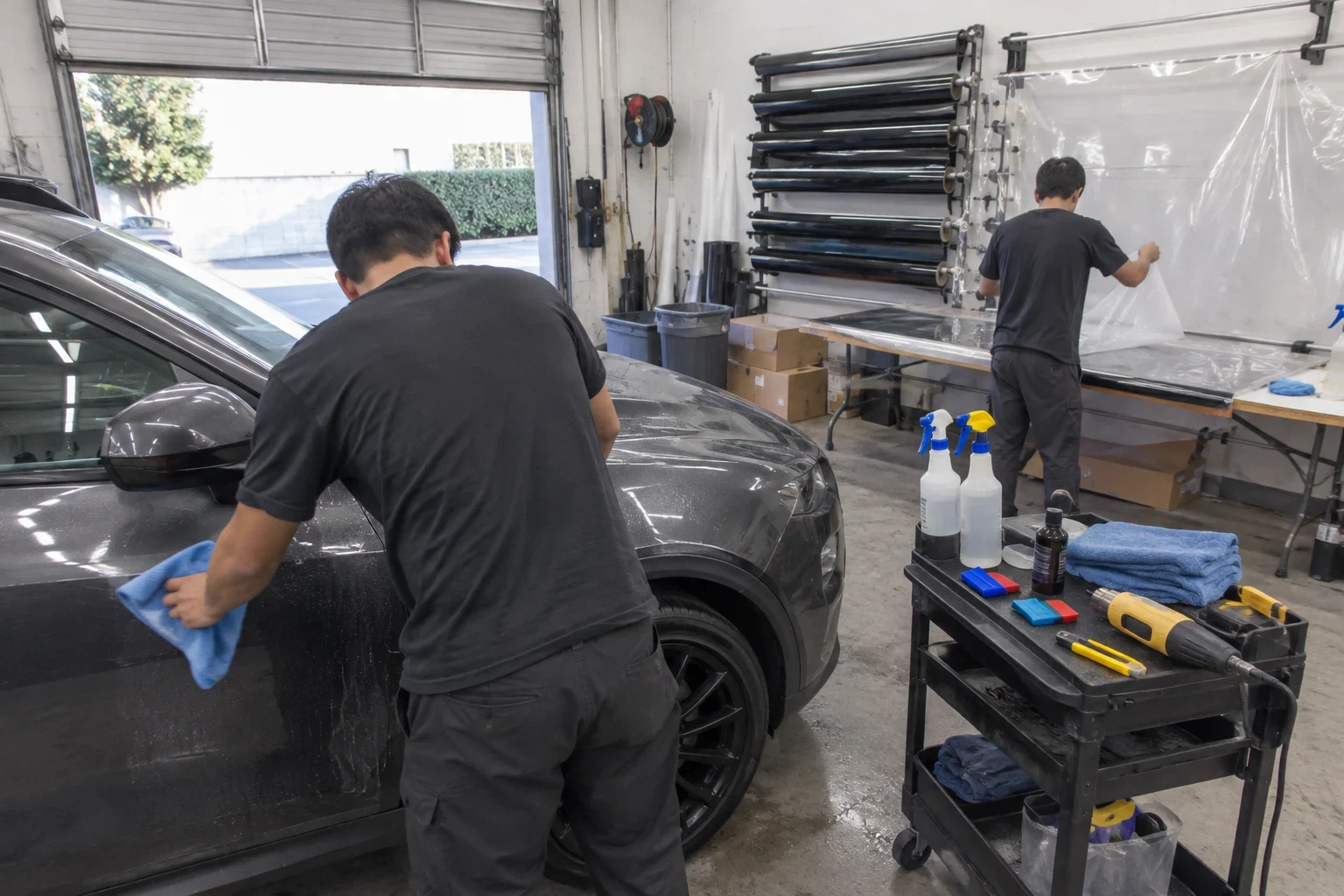
- Rear windows are curved in two directions, so we heat-form the film to the glass before it is applied. That is what keeps the back window free of fingers and creases.
- Old film removal
- If your car has faded or bubbling tint, we steam it off and clean the remaining adhesive carefully, taking extra care around the rear defroster lines so the grid keeps working.
Signs it is time for new window tint
Purple or brown film
That color shift means the dye in a dyed film has broken down under UV. The film is no longer doing much against heat and it will only get worse.
Bubbles and blisters
Bubbles that appear months or years after install point to adhesive failure. They block your view and usually spread.
Lifting edges
Film peeling at the top edge of a door glass often comes from window seals dragging on a poorly trimmed edge. Once dirt gets under it, it cannot be pressed back down.
A cabin that will not cool down
If the steering wheel and seats are still too hot to touch after a short park, your glass is letting through most of the infrared. A ceramic film addresses that directly.
Fading seats and dash
Untreated glass lets UV dry out leather and crack dash vinyl. Quality film blocks nearly all UV, which slows that damage on a new car.
What moves the price of window tint
Window tint pricing depends on the film you choose and the amount of work the car needs. We give you the full number by phone before you book, with the film line and the windows spelled out.
Film type
Dyed, carbon and ceramic films cost progressively more because the materials and their heat rejection differ. Ceramic costs the most and lasts the longest.
Vehicle size and window count
A two-door coupe has far less glass than a three-row SUV with quarter windows and a large back glass.
Removing old film
Steaming off failed tint and cleaning the adhesive adds labor, especially on back glass with defroster lines.
Glass shape
Steeply curved rear windows take more heat-forming time than flat glass.
How your tint appointment runs
- 1
Talk through the options
You bring the vehicle to our shop and we confirm which windows you want tinted, the film line and the shade for each. If old film needs to come off, we check the glass and the defroster first.
- 2
Clean and prep the glass
Each window is scraped and cleaned inside, and door glass is rolled down slightly so we can clean the top edge. Any dust left on the glass becomes a speck under the film, so this step takes time.
- 3
Shape and apply the film
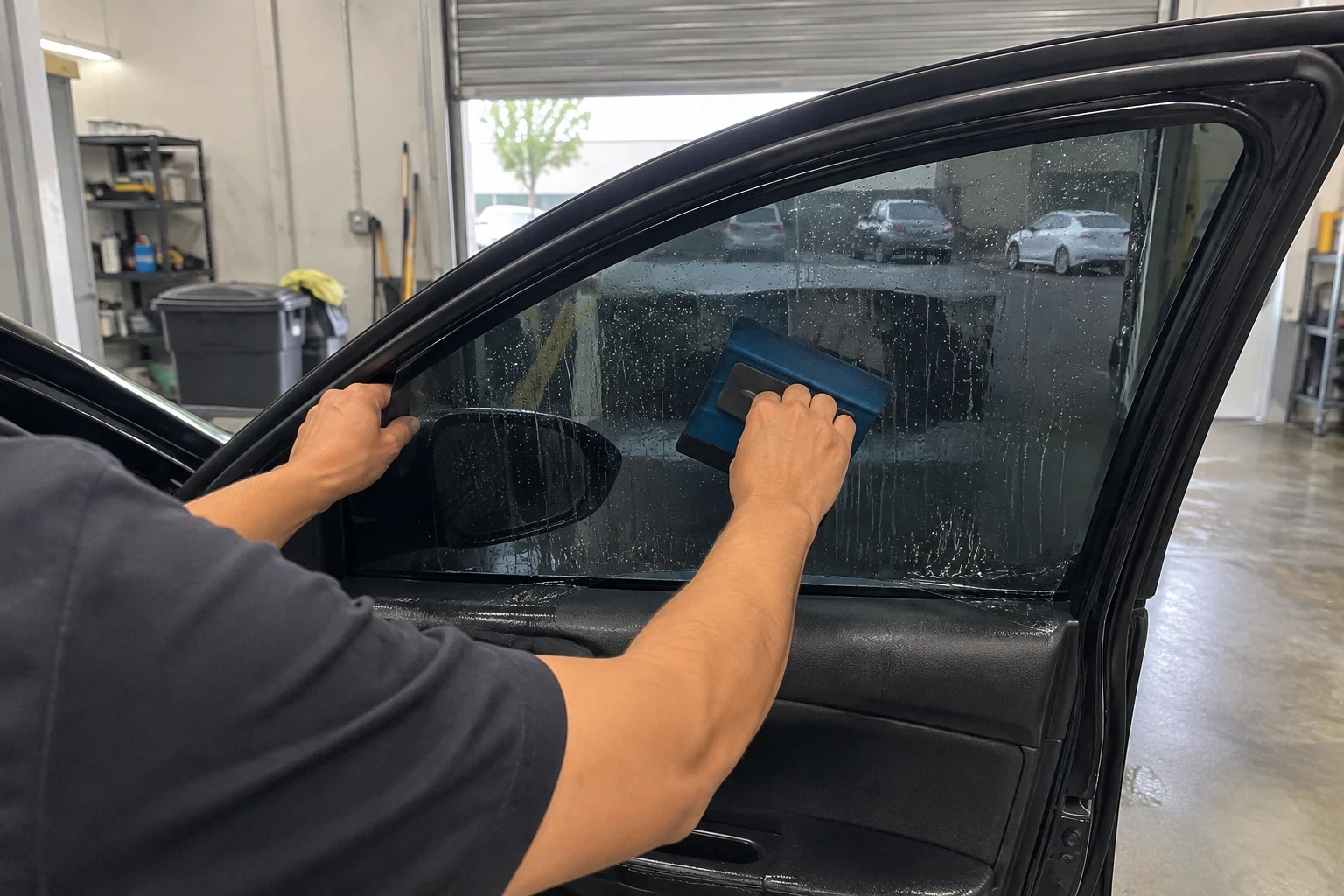
Film is cut, heat-shrunk where the glass curves, then laid on with a slip solution and squeegeed out from the center. We protect door panels and electronics from water while we work.
- 4
Cure and aftercare
Keep the windows up for a few days while the adhesive bonds. A little haze or small water pockets during the first days are normal and dry out on their own. We go over cleaning tips before you leave, including avoiding ammonia-based glass cleaners.
Window tint questions we hear often
How dark can I legally go on my front windows in California?
The front side windows must let in at least 70 percent of visible light, which leaves little room for dark film. Many drivers put a light ceramic film there for heat and UV protection without much change in look. The rear side windows and back glass can go darker on a car with two side mirrors.
Is ceramic tint worth it over carbon?
If heat is your main complaint, usually yes. Ceramic rejects more infrared at the same shade, so the cabin stays cooler without going darker. Carbon is a solid middle option if you mainly want looks and glare control.
Why does my new tint look hazy?
That is moisture from the slip solution still trapped between the film and glass. It evaporates over the first several days, faster in warm weather. Leave the windows up and let it dry rather than pressing on it.
Will tint interfere with my phone or GPS?
Metalized films can weaken signals. The ceramic and carbon films we install are nonmetallic, so GPS, cell service and keyless entry work normally.
Should I add tint at the same time as other protection?
Plenty of owners pair window tint with Paint Protection Film or Ceramic Coating on a new car, and Windshield Protection Film is a separate option for chip resistance on the front glass. We can explain how each one fits when you call.
Pick a film you understand
Tell us your car and what bothers you most, heat, glare or faded film, and we will explain which film fits and what it costs. Then bring it to our shop on the day that works for you.