ServicesPaint Protection Film
Paint Protection Film in Rosemont
Paint protection film is a clear urethane layer we install over the panels that take the most abuse. It absorbs rock chips and road debris that would otherwise break through your clear coat. We explain each coverage option in plain terms so you pay for the protection you actually need.
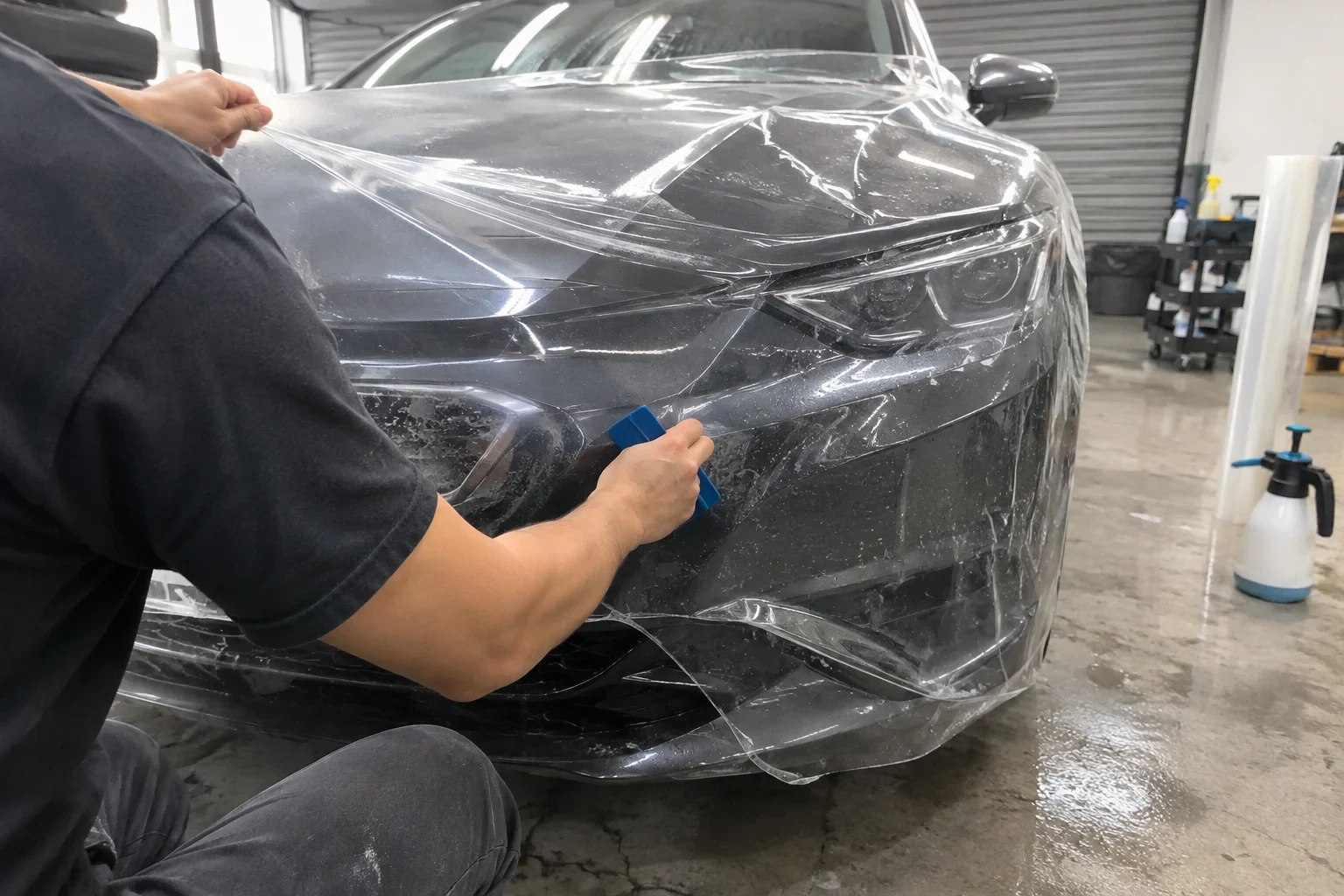
What paint protection film is and when it makes sense
Most people still call it clear bra. Modern paint protection film is a thermoplastic urethane sheet roughly 8 mils thick, several times thicker than a factory clear coat. When a pebble hits it at freeway speed, the film flexes and spreads the impact instead of letting it crack the paint. Its top layer is self-healing, so fine wash swirls soften and fade once the film warms up, whether that heat comes from a parked afternoon outside or a rinse with warm water.
Film earns its cost when the threat is physical damage: chips on the bumper's leading edge, a sandblasted hood, scuffs below the door handles. If your main goal is gloss and easier washing, a ceramic coating may be enough on its own. Many owners combine the two, film on the impact zones and coating over everything.
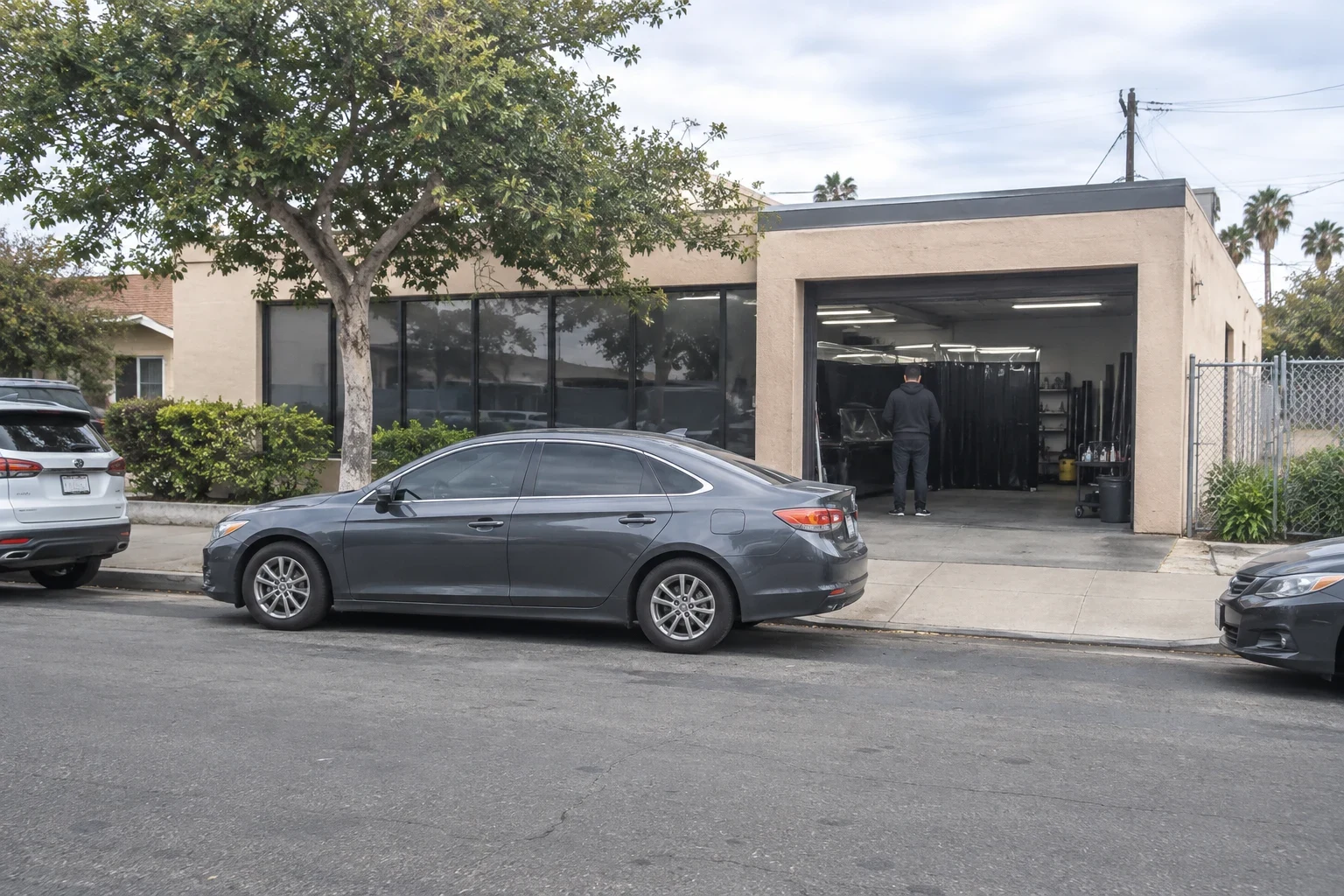
We are a STEK certified installer, which means we have been trained on that manufacturer's film and installation methods. You bring the car to our shop, and the work happens indoors, away from dust and wind.
What our paint protection film install includes
- Coverage planning
- We walk the car with you and point out where chips actually land on your model. Then we lay out the options: partial front, full front, track-style coverage or full body.
- Wash and decontamination
- The paint is washed, treated with an iron remover and clayed to pull embedded grit. Anything left on the surface would be sealed under the film permanently.
- Paint condition check
- Film is clear, so it shows what is under it. We look for existing chips, swirls and scratches and tell you which ones should be corrected or touched up before install.
- Precise fit and edge work
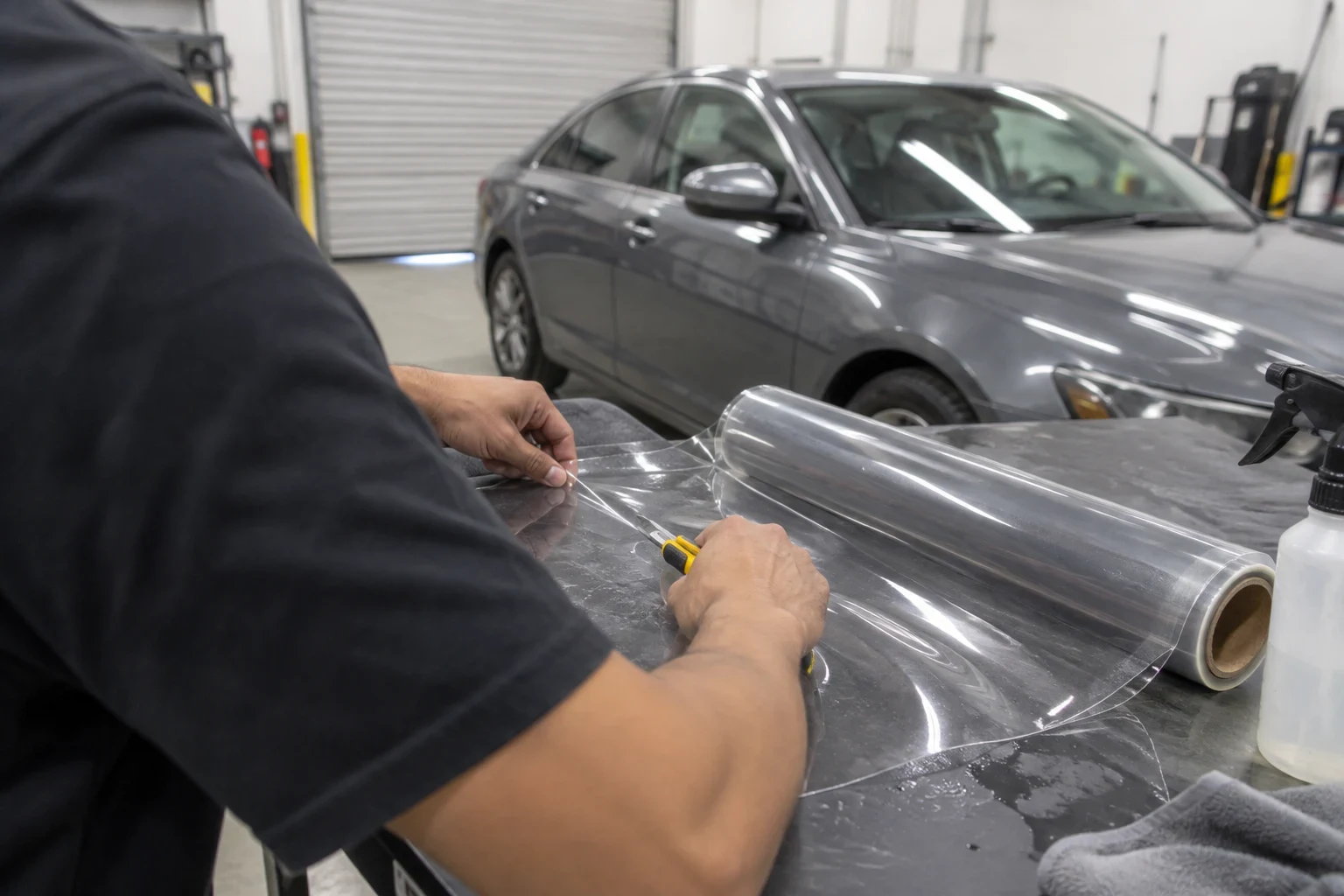
- Pre-cut patterns fit most panels closely. On panels with enough room at the edge, we fold the film around to the back side, which tucks the cut line out of view and gives dirt and water less to catch on.
- Final inspection and care notes
- Before you leave, we check every edge and corner under bright light. You get clear instructions on curing time and washing so the film settles properly.
Signs your car could use paint protection film
You just took delivery
Paint is never better than the day it leaves the dealer. Installing film before the first highway trip keeps it that way.
Chips on the front bumper
Small white or gray dots along the bumper and hood edge are stone chips that reached the primer. They only multiply with mileage.
A long freeway commute
Trucks and construction zones throw gravel daily. Sacramento-area freeway driving puts the front of a car in that path every day.
Bug and droppings etching
Bug splatter and bird droppings are acidic and can etch clear coat within days in summer heat. Film takes that etching instead of your paint.
Matte or specialty paint
Matte finishes cannot be polished out once they are scratched. A matte-finish film protects them without adding gloss.
A lease return ahead
Panel damage counts against you at turn-in. Film over the front end often costs less than repainting it.
What moves the price of paint protection film
Two jobs both labeled full front can use very different amounts of film and labor, so there is no single price. Most of the difference comes down to two things: the number of panels being covered and the state of the paint before film goes on. When you phone us, we ask about your vehicle and how you drive it, then walk you through each line of the quote.
Coverage area
Partial front uses the least film. Full front, track-style coverage and full body each add panels, material and hours.
Panel shape
Deep bumper vents, sensors, sharp body lines and large mirrors take more cutting and stretching. Some vehicles simply take longer to wrap.
Paint condition
New paint may need only a wash and decontamination. Older paint with swirls or chips may need polishing or touch-up first, which adds time.
Film finish
Gloss film and matte film are priced differently. The finish you choose also changes how the car looks afterward.
Old film removal
Yellowed or cracked film from a previous install has to come off with its adhesive before new film goes on.
How the day goes at our shop
- 1
Drop-off and walkaround
We note existing damage with you, confirm the coverage you chose and answer any last questions.
- 2
Prep and correction
Wash, decontamination and any agreed polishing happen first. A final alcohol wipe removes oils so the adhesive bonds evenly.
- 3
Install
Each piece is positioned on a slip solution, then squeegeed out to push water from under the film. Edges are tucked and set with a tack solution.
- 4
Inspection and pickup
We check for lifted edges, trapped debris and alignment. Small water haze may remain for a few days and clears as the film cures.
Paint protection film questions
Will the film turn yellow?
Older clear bra films did yellow from UV exposure. Current urethane films use UV-stable topcoats and adhesives that resist it far better. Keeping the film clean also helps, since baked-on contamination is what usually discolors it.
Can people tell the film is there?
On gloss paint, well-installed film is hard to spot from a normal distance. Up close you may see an edge line where a panel ends. Wrapped edges reduce that, and we tell you in advance where seams will fall on your car.
Does it damage paint when it comes off?
On factory paint, film generally peels off cleanly with heat and patience. Repainted panels are a different case, because aftermarket paint may not bond as firmly and can lift with the film. Tell us about any bodywork so we can plan for it.
How long will my car be at the shop?
Partial front coverage is usually a shorter visit than full body, which can take several days. Paint correction adds time. We give you a realistic drop-off and pickup plan when we quote the job.
How do I wash it afterward?
Wait about a week before the first wash so the adhesive can finish curing. After that, hand wash with a pH-neutral soap and keep pressure washer tips away from the film edges.
Can I put ceramic coating over the film?
Yes, and many owners do. A coating made for film adds slickness, so bugs and grime rinse off more easily. Our Ceramic Coating page explains how the two work together.
Find out which coverage fits your car
Tell us your vehicle, how you drive it and what damage worries you. We will explain the coverage options and what each costs, then you decide.